Wondering why two Malibu homes with similar square footage can be priced millions apart? In Malibu, where you buy matters as much as what you buy. Micro-markets along the coast and just inland create very different experiences, risks, and resale profiles. In this guide, you’ll learn how beachfront, bluff-top, canyon, and land-side locations shape value, privacy, and day-to-day living so you can buy with clarity and confidence. Let’s dive in.
Beachfront: prestige and direct sand
You come to Malibu for the beach, and nothing beats being on the sand. Beachfront homes sit directly on or adjacent to the beach, including iconic stretches like Carbon Beach, Broad Beach, and Malibu Colony. Lots tend to be linear and shallow from sand to PCH, so space for expansion is limited compared to inland estates.
Pricing skews to the top of the market. Beachfront parcels command premium pricing per square foot, with sales ranging from multiple millions to the very top of Malibu records. You pay for rarity, direct beach access, and world-class views.
The lifestyle trade-off is prestige and ocean recreation balanced by visibility and oversight. You enjoy immediate access to the sand, but you may experience more foot traffic and PCH noise depending on siting. Coastal rules can add time and complexity if you plan to remodel.
Resale drivers include direct beach access, unobstructed views, and the cachet of addresses such as Carbon Beach and Malibu Colony. Risks include coastal erosion, sea-level rise concerns, limited expansion options, and higher insurance and maintenance due to salt and humidity. For diligence, prioritize coastal permit history, flood risk checks, shoreline protection structures and permits, and insurance availability and premiums.
Bluff-top: views and visual drama
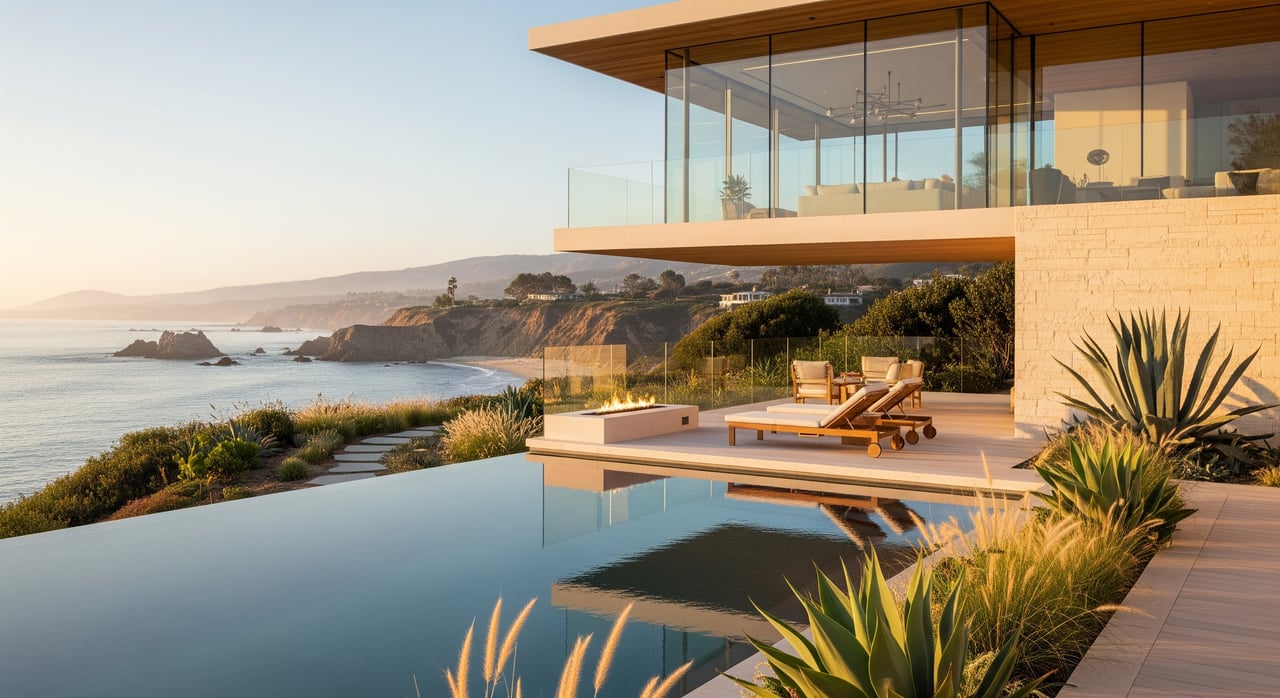
Bluff-top homes sit above the shoreline with commanding ocean vistas. Architecture ranges from mid-century to contemporary, often with terraced landscaping and private access drives. The appeal is the panoramic view and more vertical separation from beach activity.
Prices are premium relative to inland areas, usually below absolute beachfront. Value hinges on view corridors, lot stability, and how easy the property is to access. The best bluff vistas hold strong resale appeal.
Lifestyle trade-offs include spectacular views and privacy balanced by geologic considerations like bluff retreat and steep driveways. Permitting often involves coastal oversight. Resale benefits include unobstructed vistas and prestigious bluff addresses. Risks include erosion, setback requirements, and slope conditions that can limit additions or pool placement. Diligence should include geotechnical reports, slope stability history, coastal development permits, and verification of any retaining or mitigation structures.
Canyon estates: privacy and acreage
Canyon properties sit inland among ridgelines and oaks in areas such as Corral Canyon, Kanan/Latigo, and Malibu Canyon. You’ll find larger lots, compound-style layouts, and room for guest houses, equestrian facilities, or hobby spaces.
Pricing spans a wide range. Some canyon estates reach similar total prices as bluff-top homes, but per-acre pricing is typically lower due to larger land parcels and inland location. Buyers who prioritize privacy and land tend to focus here.
The lifestyle trade-off is deep privacy and room to create a compound balanced by longer drives to the beach and higher wildfire exposure. Some properties use private wells and septic systems, which require additional diligence. Resale is supported by scalable land and lifestyle amenities. Risks include wildfire, narrow canyon roads with seasonal access constraints, and post-fire debris flow hazards. Due diligence should include fire-hardening history, defensible space, road easements and ingress/egress, septic and percolation reports, and well status if applicable.
Land-side: access and everyday ease
Land-side refers to properties on the mountain side of PCH, including neighborhoods such as Malibu Park and Serra Retreat-style enclaves. Lots can be larger and flatter than coastal parcels, with traditional or ranch-style homes and easier street access.
Prices are generally more approachable than beachfront or bluff-top on a per-parcel basis, while still reflecting Malibu’s desirability. Many buyers choose land-side for Malibu living without the intensity of coastal exposure.
The lifestyle trade-off is convenience and privacy without direct ocean frontage. You often have simpler access to services and inland road networks, and some areas are closer to schools within the Santa Monica–Malibu Unified School District boundary. Resale benefits include broader appeal to a wide luxury buyer pool and lower direct coastal hazard exposure. Risks include wildfire exposure in wildland–urban interface zones and utility variations such as septic versus sewer. Diligence should confirm school district boundaries as needed, wildfire risk, and utility status.
What shapes value and resale
Understanding the forces that cut across all micro-markets helps you gauge long-term value and liquidity.
Coastal regulation and permits
Most of Malibu lies in the California Coastal Zone. Significant remodels, new construction, and shoreline protections often require Coastal Development Permits administered by the City and reviewed under state coastal policies. Expect added time and uncertainty for sea-side projects, and budget accordingly.
Coastal hazards and erosion
Beachfront and bluff-top parcels are most exposed to storm erosion and long-term sea-level rise scenarios. Over longer ownership horizons, some sites may see higher mitigation costs or shrinking usable land. Document local shoreline history and any prior mitigation.
Wildfire and post-fire risk
Canyon and land-side areas sit within high or very high fire hazard severity zones in many parts of Malibu. Past fires show the importance of defensible space, resilient construction, and reliable access for firefighting. Post-fire debris flow can be a factor on steep terrain.
Utilities, sewage, and water
Many homes operate on septic systems, which affect bedroom counts, guest houses, and remodel potential. Some inland estates use wells. Verify power reliability, especially in areas susceptible to wildfire-related shutoffs. Utility capacity and upgrade costs can change your plan and timeline.
Insurance and financing
Coastal and wildfire exposures can make insurance more expensive or harder to place. Some carriers have tightened underwriting in high-risk areas, and earthquake coverage is typically separate. Lenders evaluate insurability too, so complete early insurance checks before you finalize terms.
Access, traffic, and egress
PCH is Malibu’s main artery. Traffic, construction, or emergency closures can affect daily life and evacuation timing. In canyons, a single access road can create a bottleneck during emergencies. Evaluate commute patterns and emergency egress routes.
Market liquidity and buyer pool
Beachfront addresses attract a global luxury audience and often deliver stronger liquidity at the top end. Ultra-custom or remote canyon compounds can appeal to a narrower buyer group, which can extend time on market or require price flexibility.
Due diligence checklist
Use this checklist to reduce risk and preserve resale across Malibu’s micro-markets.
Inspections and reports
- Full physical inspection by an inspector experienced in coastal homes.
- Geotechnical report for bluff-top or steep parcels, including slope stability and soil conditions.
- Seismic and structural evaluation for older properties.
- Environmental and hazard disclosures for landslide, flood, and wildfire.
- Septic inspection, capacity verification, and permit history.
- Well report and water quality testing if applicable.
- Title review for easements, beach access rights, and rights-of-way.
Insurance and financing
- Obtain early insurance quotes, including homeowners, wildfire, and water-related coverage.
- Confirm lender approach to properties with seawalls, bluff risk, or complex hazards.
- If you plan to rent, confirm insurance and lending implications.
Permitting and constraints
- Pull building permit history and check for enforcement or code issues.
- Confirm Coastal Development Permit requirements for any planned alterations.
- Review any conservation easements, historic designations, or CC&Rs that limit use.
Utilities and maintenance
- Verify sewer versus septic, well versus municipal water, and communications reliability.
- Budget for elevated maintenance, including salt corrosion on the coast and erosion control on slopes.
- Confirm the status and permits for seawalls, retaining walls, or shoreline armoring.
Resale and exit planning
- Consider future buyer pool based on property type and location.
- Evaluate potential for additions, subdivision, or rebuilds within local and coastal rules.
- Review property tax considerations and any special assessments.
Lifestyle priorities
- Decide your privacy versus visibility threshold, especially near beach access and PCH.
- Map proximity to dining, services, marinas, and trail systems.
- Plan for staff quarters, secure parking, and site security if needed.
- Align recreation needs, such as immediate surf access, equestrian facilities, or wellness amenities.
Malibu buyer tips
- Prioritize resilience. Fire-resistant landscaping, backup power, water management, and documented hazard mitigation can support insurance and resale.
- Balance customization with broad appeal. Neutral design and timeless finishes help preserve value across market cycles.
- Expect some transactions to be private. Many high-end Malibu deals occur off-market through broker networks. A connected team helps you access opportunities early.
- Match property to your risk profile. If you value privacy and acreage, canyon estates offer scale with wildfire diligence. If you want instant beach living and visibility, beachfront delivers prestige with coastal oversight.
Buying in Malibu is about aligning your lifestyle with the micro-market that fits your risk tolerance, privacy needs, and long-term plan. If you want a trusted advisor to navigate off-market opportunities, coastal permitting, and vendor coordination, connect with the team that treats your goals like a portfolio strategy. Reach out to Alessandro Corona for discreet, concierge-level guidance from first tour to post-close support.
FAQs
What are Malibu’s key micro-markets for luxury homes?
- Malibu’s core micro-markets are beachfront, bluff-top, canyon estates, and land-side neighborhoods on the mountain side of PCH, each with distinct risks, pricing, and lifestyle.
How do beachfront and bluff-top prices compare in Malibu?
- Both sit at the premium end of the market, with beachfront typically commanding the highest per-square-foot pricing due to direct sand access and iconic addresses.
What risks should I weigh for canyon and land-side homes?
- Canyon and land-side areas often face higher wildfire exposure and may have septic or well systems, so fire-hardening, utility checks, and access planning are essential.
How do coastal permits affect Malibu remodels or rebuilds?
- Much of Malibu lies in the Coastal Zone, so significant work often requires Coastal Development Permits that add time, cost, and conditions to projects.
Which micro-market offers the most privacy in Malibu?
- Canyon estates generally provide the deepest privacy due to larger lots and natural buffers, while some gated beachfront compounds also achieve strong privacy with careful design.
How does market liquidity differ across Malibu locations?
- Beachfront addresses attract a wider national and international buyer pool, while highly specialized or remote canyon properties can see longer market times.